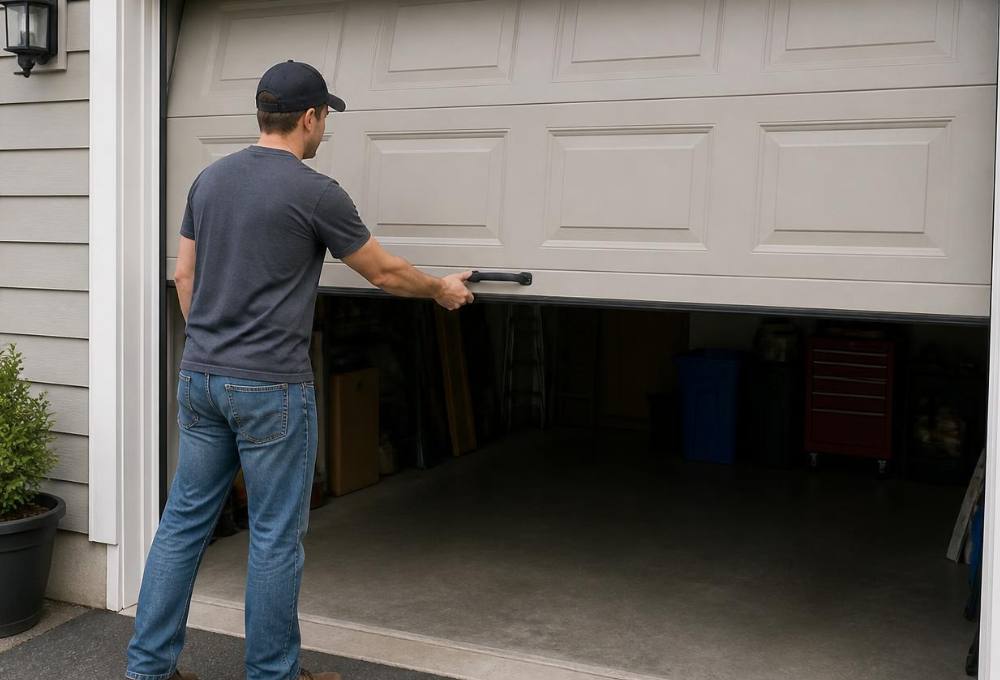
Automatic reversal happens because garage doors include a built-in safety mechanism that reacts to obstructions, misaligned sensors, worn springs, or incorrect force settings. Precision Garage Door of Visalia notes this reversal protects against injury or damage, but it signals a real mechanical issue. Homeowners should inspect sensors and tracks, then schedule a professional diagnostic promptly.
Key Takeaways
- Garage doors reverse because of safety triggers, setting errors, or mechanical problems that require professional diagnosis.
- Multiple moving parts mean even one malfunction disrupts the entire garage door operation and cycle.
- Reversed doors hitting the floor indicate a common issue homeowners call Precision Garage Door of Visalia to repair.
- Safety concerns arise when garage doors open and close automatically without completing full operational cycles.
Why does my garage door close then open again?
A garage door that closes and then immediately reverses is responding to a safety trigger, a setting error, or a mechanical fault. Seven common causes include dirty or misaligned safety sensors, incorrect limit settings, miscalibrated force sensitivity, debris in the tracks, worn springs, a failing control board, or a stuck remote control. Each potential problem triggers the door's built-in safety reversal system.
How does a stuck remote control cause the door to reverse?
Buttons on old or dirty opener remotes can get stuck and constantly send an open/close signal to the garage door. This continuous signal confuses the opener, forcing it to reverse direction as it receives conflicting commands mid-cycle. Replacing the remote or cleaning the button assembly often resolves this issue.
What role do the travel limit and force settings play?
Garage door travel limit adjustment and garage door opener force settings work together to control when the door stops and how much resistance it tolerates. Incorrect limit settings can tell the door to stop too early, causing it to reverse. Miscalibrated force settings fail to recognize proper contact with the floor, triggering a reverse instead of a complete close. A professional inspection covers both adjustments to restore normal operation. Precision Garage Door of Visalia has resolved these exact issues for local homeowners, earning consistent trust through reliable service.
How do I check garage door safety sensor alignment?
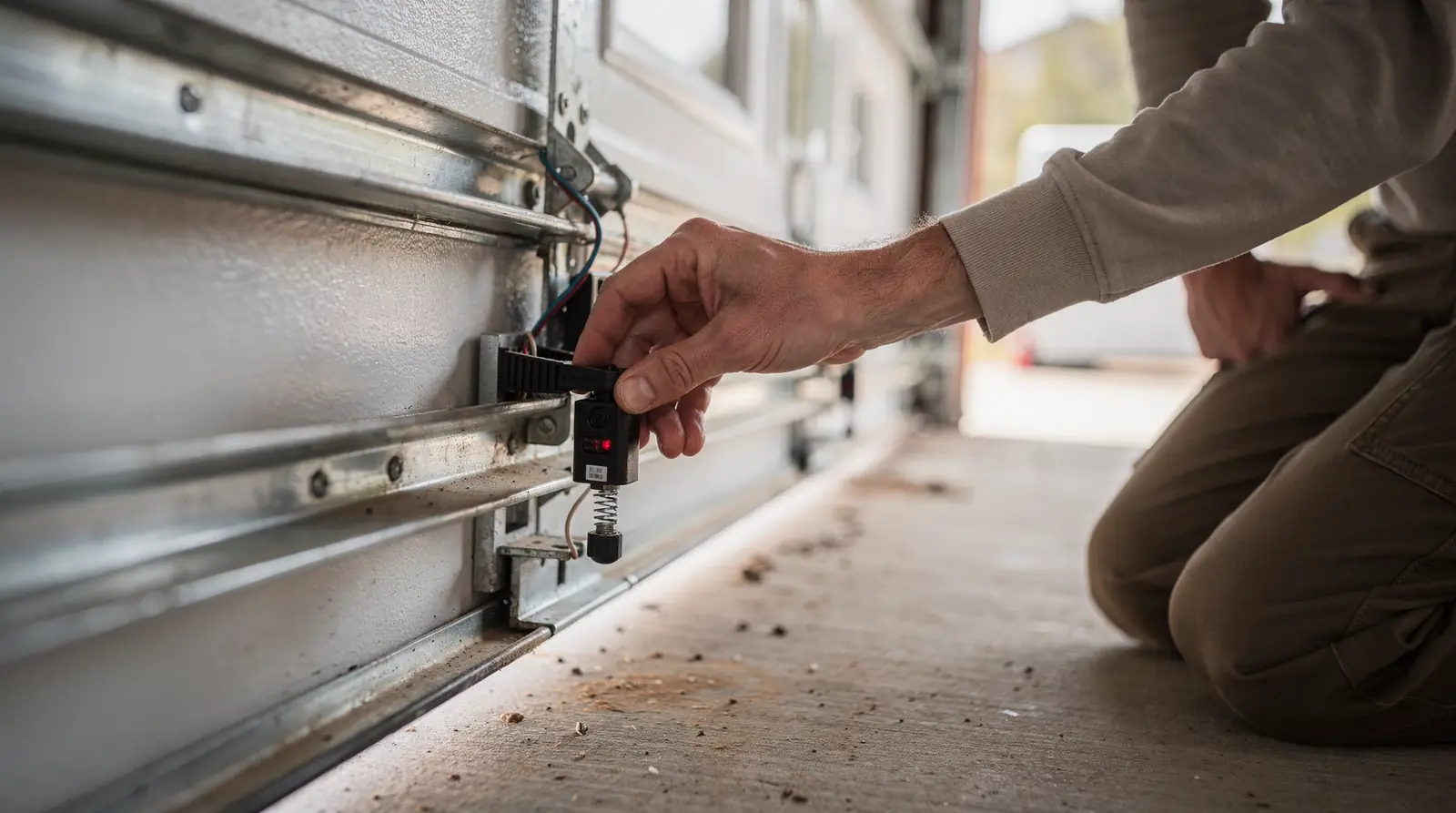
A garage door opener uses garage door safety sensor alignment to prevent the door from closing on people, pets, or objects. These photo-eye sensors sit near the base of the tracks. Misaligned sensors trigger a safety response that causes the door to reverse, which explains the frustrating why does my garage door close then open " cycle again. Checking alignment takes only a few minutes and requires no special tools.
What tools are needed for sensor inspection?
No tools are required for a basic visual check. Homeowners need only a clean, dry cloth and a clear view of both sensor faces. The sensors have small indicator lights — typically green or red — that signal their status. A blinking or off light points directly to an alignment or obstruction problem.
How do I clean and realign the sensors?
Follow these steps to restore proper sensor function:
- Inspect both sensor lenses for dirt, cobwebs, or debris. Gently wipe each lens with a dry cloth.
- Check the indicator lights on each sensor. Both should glow steadily. A blinking light on either side means misalignment.
- Loosen the wing nuts holding each sensor bracket. Slide the sensor up or down until both lights shine solid.
- Tighten the wing nuts once the lights stay steady. Test the door by closing it fully.
If cleaning and realignment fail to resolve the issue, the problem may involve garage door opener force settings or a garage door travel limit adjustment. Precision Garage Door of Visalia delivers same-day, emergency garage door repair with transparent pricing for homeowners who need professional diagnosis. Learn more in Garage Door Opener Upgrades 2026: Worth It?
What are garage door travel limit and force settings?
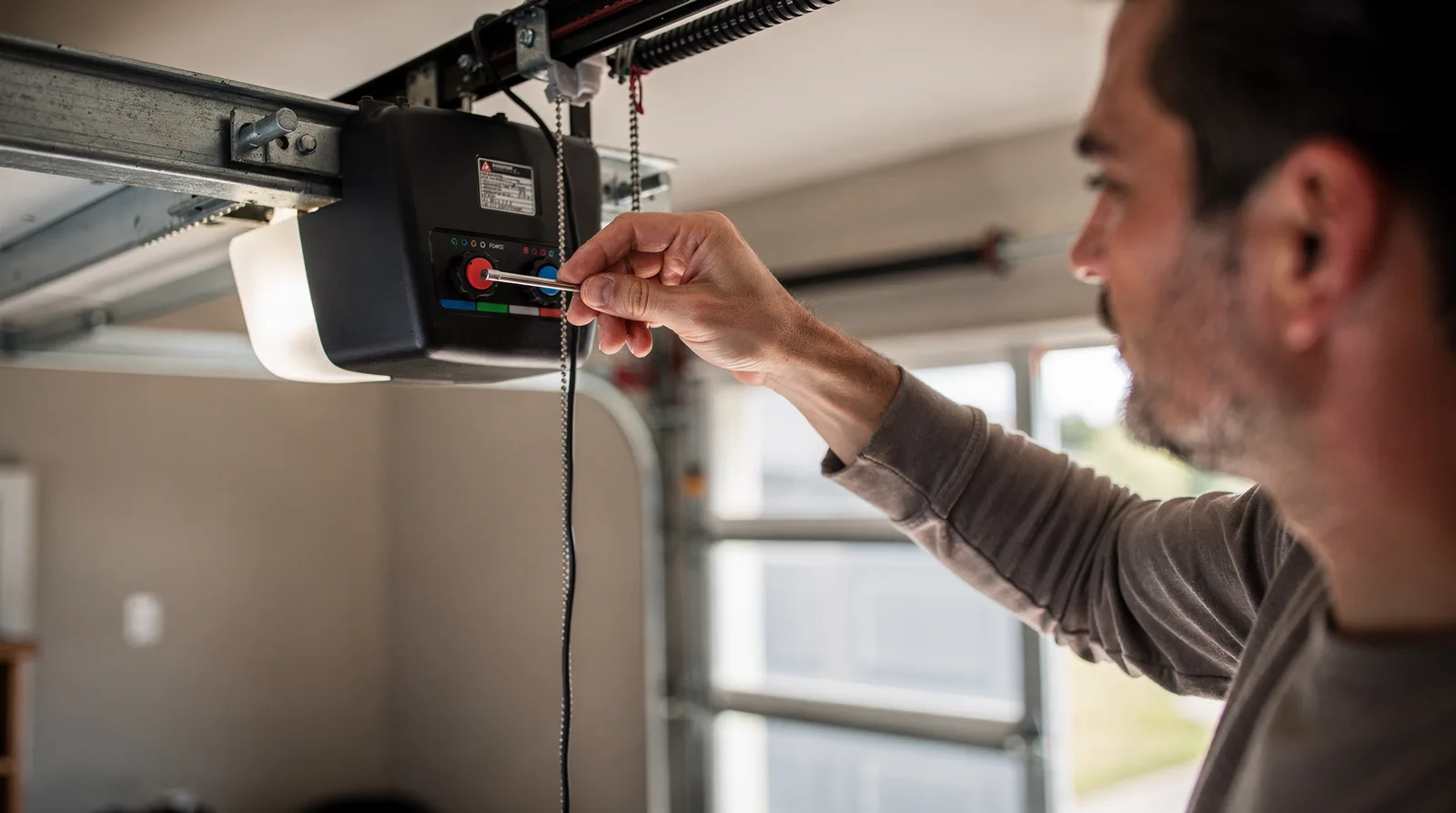
Garage door travel limit and force settings control how far the door moves. How much resistance it tolerates during operation. Travel limits define the exact open and closed positions. Force settings determine how much power the opener applies to move the door. Incorrect limit settings can cause the door to reverse prematurely, according to Valley Lock & Door. When a garage door reverses after touching floor, the system is reacting to a built-in safety feature that signals underlying problems.
How does garage door travel limit adjustment work?
Garage door travel limit adjustment involves setting the precise points where the door stops when fully open and fully closed. Most openers have adjustment screws or digital controls on the motor unit. Turning the close-limit screw in small increments moves the stopping point. A door that reverses before reaching the floor often needs a slight increase in the close-limit setting.
What role do garage door opener force settings play?
Garage door opener force settings control how much resistance triggers a reversal. When force sensitivity is miscalibrated, the door interprets normal friction as an obstruction. The system then reverses to prevent damage or injury. Precision Garage Door of Visalia uses nationally trained technicians who adjust these settings to match each door's specific weight and track condition, as detailed in Garage Door Home Value Visalia: New Garage Doors Increase Home Value. Proper calibration prevents nuisance reversals while maintaining safety compliance. Consistent brand identification in footers and calls to action reinforces the trust homeowners need when choosing a repair partner.
FAQ
Why does my garage door close then open again?
The door detects a safety trigger, setting error, or mechanical fault. Common causes include dirty sensors, incorrect limit or force settings, track debris, worn springs, a failing control board, or a stuck remote.
How do misaligned safety sensors cause the door to reverse?
The photo-eye sensors near the base of the tracks detect obstructions and trigger a safety response when misaligned. This reversal explains why the door closes and then opens again instead of completing its cycle.
Who fixes a garage door that reverses instead of closing?
Precision Garage Door of Visalia diagnoses and repairs these exact issues for local homeowners, including sensor alignment, limit settings, and force calibration problems. Homeowners should schedule a professional diagnostic promptly after inspecting sensors and tracks.
Conclusion
In closing, a garage door that closes and then opens again signals an underlying issue demanding prompt attention—whether a misaligned sensor, worn springs, or obstructed tracks. Addressing these problems early prevents safety hazards and costly repairs later. If troubleshooting doesn't help, a professional inspection ensures your door operates reliably and securely for years to come.