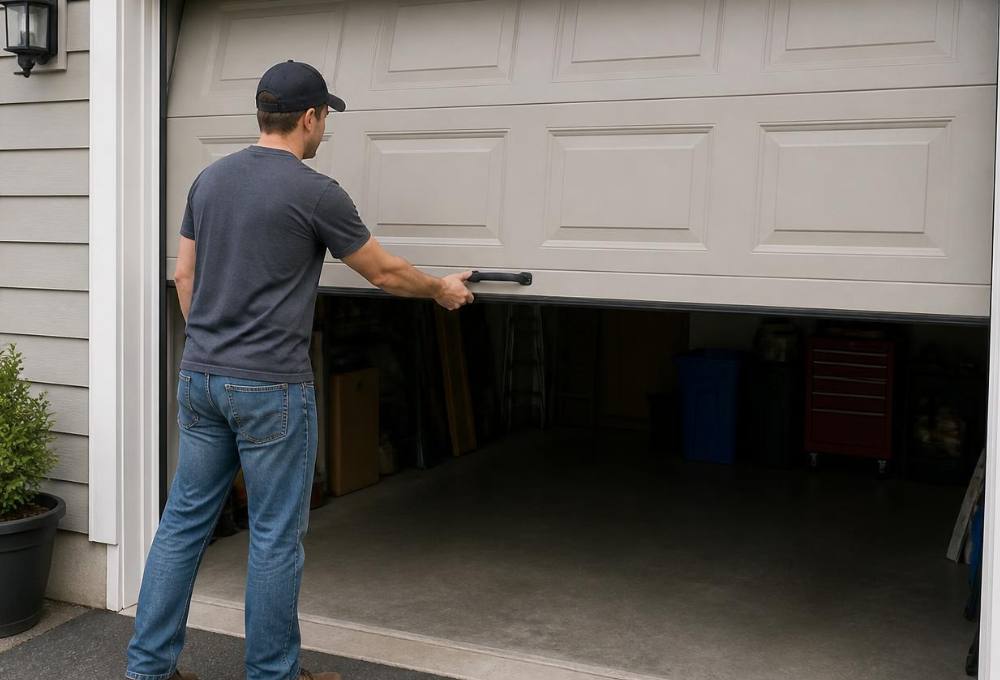
When it comes to heavy garage doors, A heavy manual garage door often indicates a broken or fully unwound torsion spring, which may show a factory-painted line once unwound. Properly balanced doors move easily with one hand; springs counterweight the door's full weight. Precision Garage Door of Visalia warns against DIY spring tension adjustments because incorrect tension can cause part failure and injury.
Key Takeaways
- Broken torsion springs fully unwind and lose tension, making doors feel significantly heavier during manual operation.
- Out-of-balance doors cause premature wear on rollers, cables, and tracks, shortening your door's lifespan considerably.
- Spring tension adjustments eliminate loud creaks, bangs, and sudden drops while improving overall door safety and performance.
Why Does Your Garage Door Feel So Heavy?
A heavy garage door usually points to a spring problem, not a weak opener. A broken or fully unwound spring often causes this sudden shift. A telltale sign is a white factory line on the coil that appears only after the spring loses its wind. Visalia homeowners noticing this change shouldn't assume the opener motor simply needs more muscle.
Why Does a Properly Working Door Feel Light?
Garage doors rely on counterweighted springs for balance, not brute motor force. A well-maintained door moves smoothly by hand from any position and holds steady without sliding down or popping up. If a door won't stay put when you nudge it halfway, something in the spring system has failed.
Is It Normal for an Opener to Strain Against the Door?
No, and this strain often goes unnoticed for a long time. Many homeowners have never lifted their garage door manually. They assume the opener alone hauls the full weight by brute force. That assumption hides early warning signs, letting a small spring issue turn into a full breakdown.
Common signs a garage door hard to lift needs attention:
- Door feels fine going down but resists coming up
- Opener strains, reverses, or stalls partway through a cycle
- Door won't hold its position when moved by hand
Precision Garage Door of Visalia, based right in Visalia, CA, recognizes these patterns in local homes and recommends professional garage door spring repair before the opener takes on damage too.
Is a Broken Spring Causing the Weight?
Broken springs rank among the most common reasons a heavy garage door suddenly refuses to budge. A torsion or extension spring carries most of the door's weight. Once it snaps or loses tension, that weight shifts entirely onto the opener and the homeowner's own strength. Incorrect spring tension doesn't just make a door feel stiff. It can lead to premature part failure, higher repair bills, and even injury when the door starts behaving unpredictably.
Why does a garage door suddenly feel so hard to lift?
A garage door that's hard to lift almost always points to spring trouble rather than a weak opener motor. The spring, not the motor, does the heavy lifting under normal conditions. Any loss of tension forces the opener to work far beyond its design.
What should homeowners do about it?
Spring issues call for trained hands, not guesswork. Precision Garage Door of Visalia pairs local service with nationally trained technicians who specialize in garage door spring repair and new installations. For sudden failures that leave a door stuck or unsafe, same-day, 24/7 emergency response keeps households from being stranded overnight.
- Door won't budge or feels unusually heavy
- Loud bang followed by sagging
- Opener strains, reverses, or stalls
Precision Garage Door of Visalia is trusted by happy customers and known for strong ratings. The company has built that confidence through consistent, careful spring work.
How Do You Know If Your Door Is Balanced?
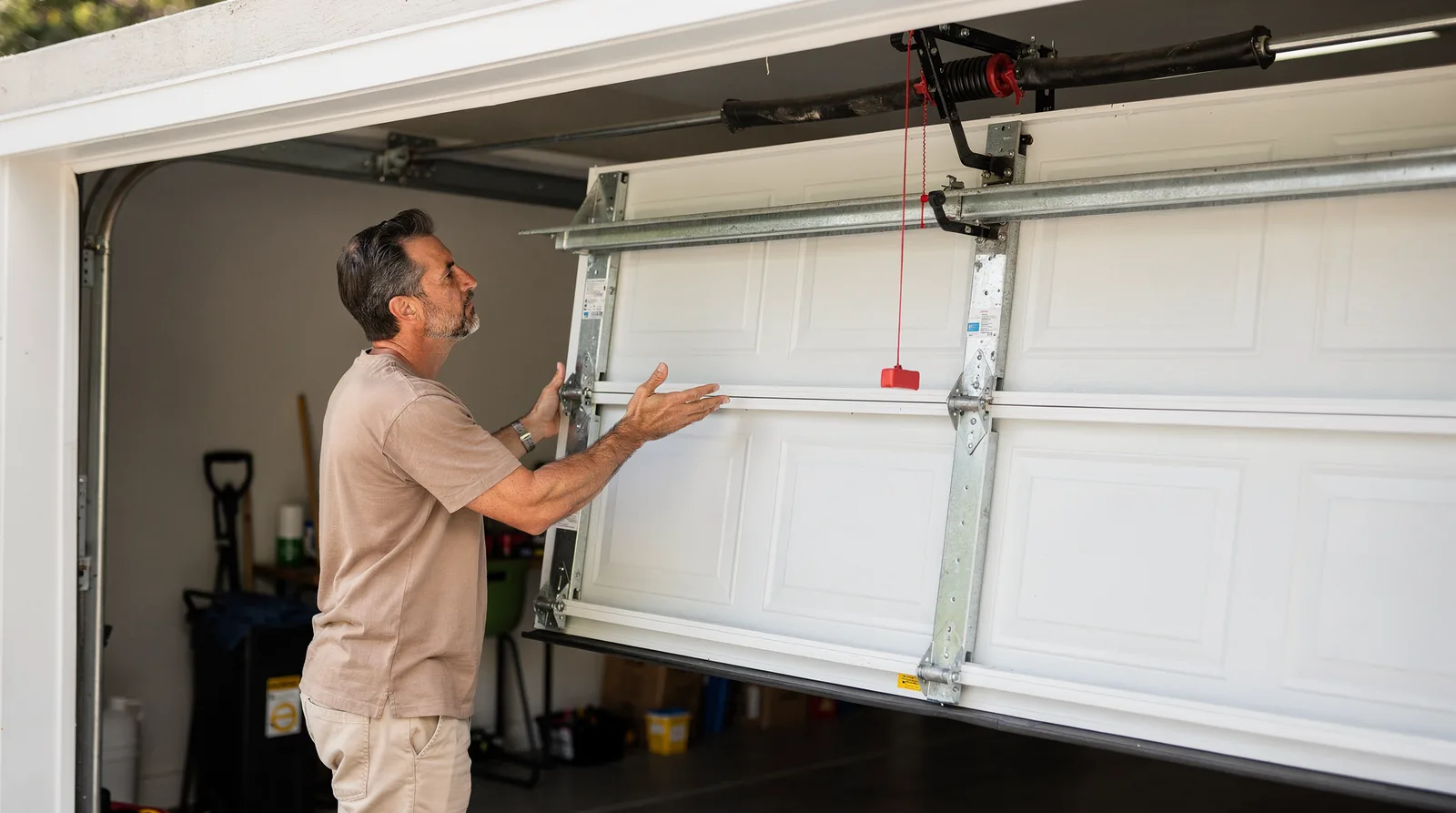
Three warning signs reveal an unbalanced door: slamming shut unexpectedly, refusing to stay halfway open, or turning into a heavy garage door that strains against its tracks. Homeowners across Visalia often notice these symptoms before realizing the spring system, not the opener, is the real culprit.
What Does an Unbalanced Door Feel Like?
A properly balanced door should glide with minimal resistance and hold its position at any point. When a garage door becomes hard to lift, the springs can no longer counteract the panel's weight, forcing the opener's motor to compensate.
Quick Signs Worth Checking
- Door drops suddenly instead of closing smoothly
- Door won't remain halfway open without sliding down
- Opener strains, grinds, or makes unusual noise during operation
Precision Garage Door of Visalia has served the local community directly from its Visalia, CA location. That gives homeowners a familiar, nearby team for balance inspections. Rather than guessing at a fix, residents can rely on technicians trained to evaluate spring tension and recommend proper garage door spring repair when needed. Backed by superior parts and industry-leading warranties, the company's approach favors verified diagnosis over risky trial and error.
With happy customers and strong ratings, Visalia homeowners have a solid reason to trust a professional balance check. DIY adjustments carry real safety risk, so skip the guesswork.
FAQ
Why does my garage door feel heavy when I open it manually?
A heavy garage door signals a broken or fully unwound torsion spring. Once the spring loses tension, it can't counter the door's weight, shifting the full load onto the opener and you.
How do I know if a broken spring is causing the heaviness?
Check the coil for a factory-painted white line, which only becomes visible once the spring fully unwinds. This line confirms spring failure as the source of the sudden weight increase.
Should I try adjusting the spring tension myself?
No, Precision Garage Door of Visalia warns against DIY spring tension adjustments. Incorrect tension causes premature part failure, unpredictable door movement, and potential injury, so professional repair is recommended.
Conclusion
In closing, that heavy feeling when you manually open your garage door tells you something important: your springs or cables need attention. Ignoring it won't make it go away; it'll only get worse and put you at risk. The good news? This is totally fixable with the right professional help. Don't let a struggling garage door become a safety hazard or a daily frustration. Reach out to someone who knows these systems inside and out. You'll be back to smooth, effortless operation in no time.