
Key Takeaways
- Gaps at garage door bottoms let rodents, insects, water, and leaves into your garage.
- Building codes require small gaps at bottom corners to prevent wood rot on concrete foundations.
- Worn seals, settling foundations, and shifting components create gaps in doors over time.
- Unsealed gaps cause drafts, water damage, pest entry, and structural deterioration.
What Causes a Garage Door Gap at the Bottom?
Settling homes and shifting hardware create most bottom-of-door gaps. Worn weatherstripping and misaligned tracks account for the rest. Visalia homes face a particular mix of heat, dust, and seasonal temperature swings that accelerate this wear. Precision Garage Door of Visalia, based right in Visalia, CA, sees these patterns across the region regularly.
As foundations settle over months and years, door components shift out of position. Materials wear down with repeated use, and small gaps start forming where the door no longer meets the floor evenly. Left unaddressed, these gaps widen and invite drafts, pests, and debris.
Why Does the Gap Show Up on Just One Side?
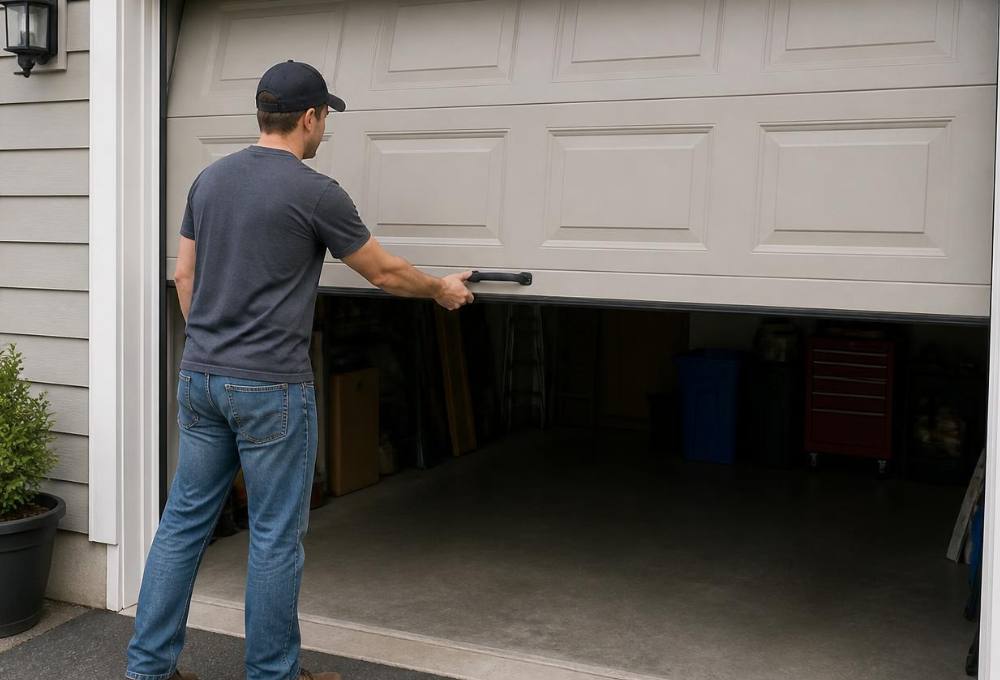
A gap on one side almost always points to misaligned tracks, one of the most common causes of uneven sealing. When a track shifts even slightly out of parallel, the door can’t press down properly along its entire bottom edge. This leaves a visible garage door gap at the bottom on one side while the other side appears to close normally.
Common contributors include:
- Settling of the home’s foundation or garage slab
- Worn or cracked garage door bottom seal material
- Loosened hardware allowing panels to shift
- Deteriorated garage door weatherstripping along the sides or bottom
Precision Door of Visalia’s nationally trained technicians combine that local familiarity with hands-on diagnostic skill. Customers rely on this pairing, trusting the team to pinpoint the exact cause before recommending a fix.
How Do You Fix a Gap at the Bottom?
Fixing a gap at the bottom of a garage door starts with identifying the cause, then matching the repair to the type of damage. A worn garage door bottom seal often needs to be fully replaced. Small corner gaps sometimes just need sealing. Homeowners facing drafts, pests, or daylight under the door can follow these steps.
- Inspect the bottom edge for cracked, flattened, or torn rubber along the full width of the door.
- For small bottom-corner gaps, fill the opening with expanding foam, a method many homeowners use to block drafts and keep rodents and insects out.
- For a damaged seal running the full length of the door, remove the old garage door weatherstripping from the aluminum track channel.
- Clean the channel thoroughly before inserting the new seal.
- Apply liquid dish soap or silicone spray to the replacement vinyl or rubber seal; the lubricant lets it slide through the channel instead of binding halfway through.
- Feed the seal through the full channel length and trim any excess.
Should Homeowners Call a Professional for a Bottom Seal Replacement?
Professional help makes sense when the gap spans one full side of the door or returns repeatedly after a DIY fix. Precision Door of Visalia pairs local service with nationally trained technicians who install superior seal and weatherstripping materials built to outlast standard hardware-store parts. Precision Door of Visalia also offers same-day, 24/7 emergency service. A drafty or pest-prone door gets addressed fast rather than left open to the elements. Every seal and weatherstripping replacement carries an industry-leading warranty, giving homeowners lasting protection against the next gap.
When Should You Call a Professional for Repairs?
A stubborn garage door gap at the bottom that won’t close after basic adjustments signals a job for trained technicians. Persistent gaps that let in light, drafts, or pests after a homeowner has tried simple fixes often point to misaligned tracks or worn garage door bottom seal components beyond a DIY patch. Ignoring the problem can have real consequences: unresolved gaps lead to drafts, water leaks, easier pest entry, and eventual damage to the door or opener.
Precision Garage Door of Visalia, a local company, offers same-day and 24/7 emergency support for these stubborn situations. Happy customers have rated the company’s repair work highly. Homeowners can read those real reviews before booking a service call.
How Can Homeowners Verify a Repair Company’s Reliability?
Checking published customer reviews offers a clear window into how a company handles **garage door weatherstripping** repairs and gap issues. Prospective customers are encouraged to explore those real experiences and compare them against their own needs before scheduling an appointment.
FAQ
What causes a garage door gap at the bottom?
Settling foundations, worn weatherstripping, and misaligned tracks create most bottom gaps. Visalia’s heat, dust, and seasonal temperature swings accelerate this wear. Precision Garage Door of Visalia sees this regularly across the region.
Why does the gap only appear on one side of the door?
A gap on one side points to misaligned tracks. When a track shifts out of parallel, the door fails to press against the track along its bottom edge, leaving a visible gap on one side while the other side closes normally.
How do you fix a garage door bottom seal gap?
Inspect the bottom edge for cracked or torn rubber, then fill small corner gaps with expanding foam or replace a fully damaged seal. Remove old weatherstripping, clean the channel, lubricate the new seal, and feed it through before trimming excess.
Conclusion
In closing, that gap at the bottom of your garage door isn’t something you need to live with; it’s a fixable problem that protects your home and improves efficiency. Whether it’s worn weatherstripping, a sagging door, or foundation shifts, addressing it sooner rather than later saves you headaches down the road. When you’re ready to tackle this issue, the team here in Visalia is ready to help you get your garage door working smoothly again.